 +91 9926520003
 sales@shahifood.in
 Delivery Charges : ₹199


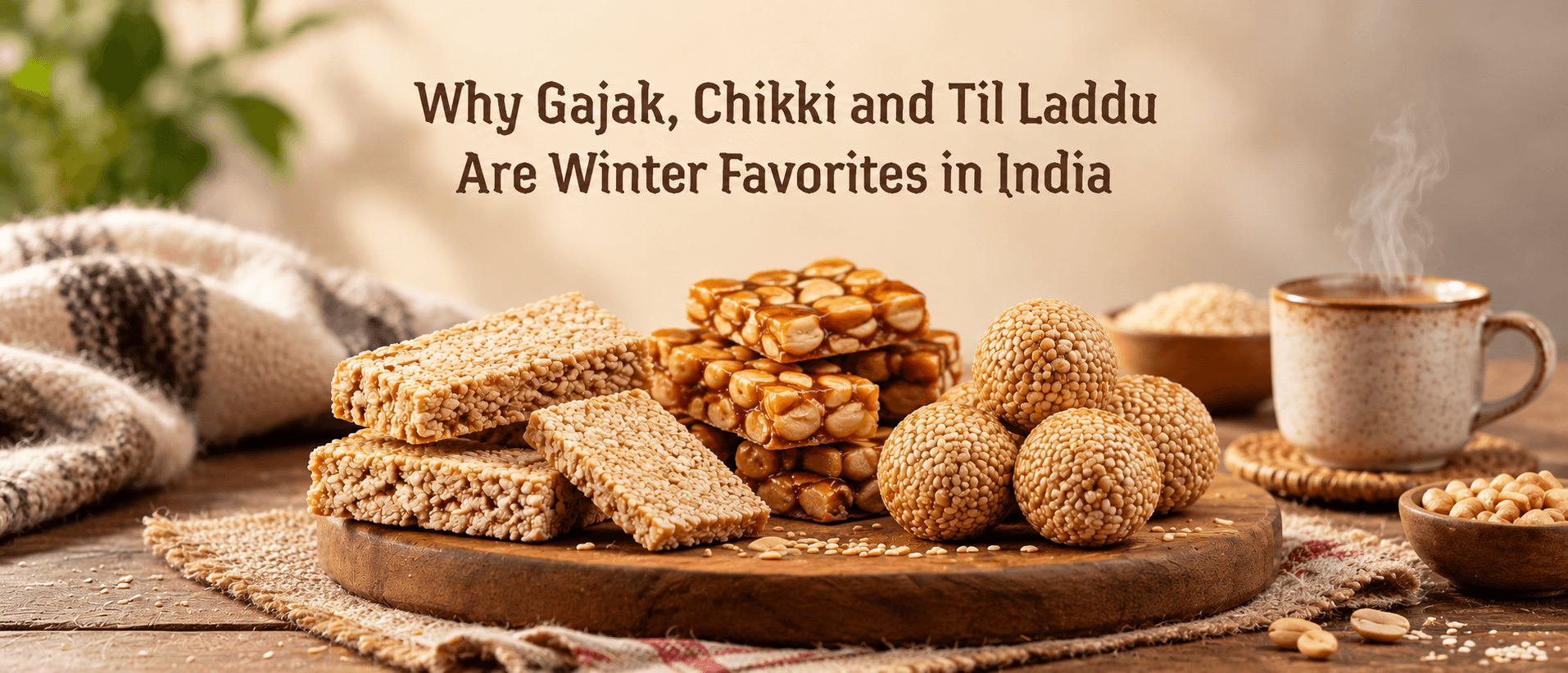
Ask anyone who grew up in North or Central India what winter tastes like, and gajak will come up before hot chocolate ever does. The same goes for chikki in Maharashtra, or til laddu at a Makar Sankranti gathering — these sweets aren’t a once-a-year festival indulgence so much as a seasonal habit, the way a scarf or a room heater is. The interesting part is that this isn’t just nostalgia talking. There’s genuine reasoning — part Ayurveda, part harvest calendar, part nutrition science — behind why these specific three sweets, out of India’s enormous mithai landscape, become the ones everyone reaches for once the temperature drops.
This guide breaks down exactly why gajak, chikki and til laddu earn their place as India’s winter favorites, what actually happens nutritionally when sesame meets jaggery, and how to tell a well-made batch from a mass-produced one.
What Are Gajak, Chikki and Til Laddu?
Before getting into the “why,” it helps to be clear on the “what,” since these three names get used almost interchangeably across regions.
- Gajak: Roasted sesame seeds (sometimes peanuts) bound in hot jaggery syrup, rolled thin and set into brittle sheets or bars. Most associated with North and Central India, especially Gwalior and Morena in Madhya Pradesh.
- Chikki: The same jaggery-and-nut technique, most commonly made with roasted peanuts, set into flatter, harder slabs. More commonly used in Maharashtra and Western India, though the word is used loosely across the country.
- Til Laddu: Roasted sesame ground with jaggery and rolled into small, round balls rather than sheets or bars — lighter and more portion-sized, closely tied to the Makar Sankranti “til-gud” tradition.
Different shapes, same underlying formula: sesame or peanuts plus jaggery. And that formula, it turns out, is doing a lot more than just tasting good.
8 Reasons Gajak, Chikki & Til Laddu Are Winter Favorites in India
Here’s what’s actually driving the craving — tradition, biology and practicality, all pointing in the same direction.
1. They’re Rooted in Ayurveda’s “Warming Foods” Philosophy
Ayurveda classifies sesame, jaggery and peanuts as “ushna” or heat-generating foods — believed to warm the body from within rather than just insulate it from outside, the way a blanket does. This isn’t a fringe belief tucked away in old texts; it’s the reason winter menus across Indian households, regardless of region, independently converge on the same handful of ingredients every year.
2. They’re the Edible Centrepiece of Makar Sankranti, Lohri, Pongal & Bihu
India’s major winter harvest festivals — Makar Sankranti, Lohri in Punjab, Pongal in the South, Bihu in the Northeast — all fall within weeks of each other, and til-and-jaggery sweets show up at nearly every one of them. The Marathi phrase “til gul ghya, god god bola” (take sesame and jaggery, speak sweet words) sums up the sentiment: these sweets aren’t just eaten, they’re exchanged as a small ritual of goodwill precisely when winter is at its coldest.
3. Sesame & Jaggery Genuinely Support the Body Through Winter
This is where tradition and modern nutrition actually agree. Sesame is one of the richest plant sources of calcium, useful when winter sunlight (and vitamin D synthesis) is lower. Jaggery carries iron, magnesium and trace minerals that refined sugar strips away in processing. Together, they’re doing real nutritional work, not just delivering empty sweetness — which is part of why these sweets have survived generations of scrutiny that other festive mithai haven’t.
4. They’re Tied Directly to India’s Sesame & Jaggery Harvest Calendar
Sesame is harvested in autumn, and fresh jaggery is pressed right as sugarcane season peaks in winter — which means gajak, chikki and til laddu made in December and January genuinely use the freshest raw material of the year. This is a big part of why gajak, in particular, has always been treated as a winter-specific sweet rather than something sold year-round like besan laddu or barfi.
5. They Carry Deep, Shared Childhood Nostalgia
Ask people from Agra, Jaipur, Meerut or Morena about winter, and many will remember the sound of a gajak seller’s cart on the street before they remember anything else about the season. That kind of sensory memory — tied to a specific smell, sound or taste — is exactly what makes a food a genuine “favorite” rather than just a seasonal snack. Few Indian sweets carry as strong a nostalgia thread as gajak and til laddu do.
6. They Travel Well and Need No Refrigeration
Unlike milk-based mithai that spoils within days, gajak and chikki are dry, jaggery-set sweets that comfortably last three to four weeks at room temperature. That practicality matters more in winter than people realise — these are the sweets that get packed for long train journeys, sent to relatives in other cities, and kept in a tin on the kitchen counter without anyone worrying about spoilage.
7. They Offer Real Indulgence Without Relying Purely on Refined Sugar
Because jaggery is the primary sweetener rather than white sugar, and because nuts or seeds make up a large share of the actual bulk, these sweets sit in a different nutritional category from syrup-heavy mithai. They still deserve to be eaten in moderation, but the ingredient list itself — sesame, peanuts, jaggery — gives people a reason to feel less conflicted about reaching for a second piece than they might with a sugar-syrup-soaked gulab jamun.
8. They’re Affordable, Accessible Comfort Food
A slab of peanut chikki costs a fraction of most boxed mithai, and gajak, chikki and til laddu are sold everywhere from railway platforms to premium sweet counters. That accessibility is part of why they became winter staples rather than occasional treats — nobody needs a special occasion or a big budget to keep a stock going through the season.
The Science Behind the Craving: What Til, Gur & Peanuts Do in Winter
Sesame (Til) — Calcium, Joints & Winter Skin
Sesame is calcium-, iron- and zinc-rich, and its vitamin E content is often credited with helping combat the dry skin and chapped lips that come with cold, low-humidity air. Its healthy fat content also supports joint lubrication — relevant, since joint stiffness is a common winter complaint, especially among elders.
Jaggery (Gur) — Iron, Digestion & the “Warming” Effect
Jaggery is unrefined, so it retains molasses-derived iron, magnesium and potassium that white sugar loses in processing. It’s also traditionally eaten in small amounts after meals as a digestive aid, and its comparatively lower glycemic impact versus straight sugar is part of why it’s long been considered the “gentler” sweetener, even before nutrition labels existed to prove it.
Peanuts — Protein & Sustained Winter Energy
Peanuts, the base of most chikki, bring plant protein and healthy fats that slow down how quickly the body absorbs the jaggery’s sugars — which means chikki tends to feel more filling and sustaining than a plain sugar sweet of the same size, useful when the body is already working harder to stay warm.
Gajak vs Chikki vs Til Laddu: What’s the Difference?
A quick side-by-side, since this is one of the most common points of confusion:
| Gajak | Chikki | Til Laddu | |
| Main Ingredient | Sesame (or peanuts) | Peanuts (mainly) | Sesame |
| Shape | Thin sheets / bars | Flat slabs | Small round balls |
| Texture | Flaky, brittle | Hard, crunchy | Soft-crumbly, dense |
| Most Linked Region | North & Central India | Maharashtra & West India | Pan-India, Makar Sankranti |
| Best For | Snacking, gifting | Bulk / budget gifting | Portion-controlled snacking |
In practice, the names overlap regionally — what’s called gajak in Gwalior might be called tilpatti elsewhere — but the sesame-versus-peanut base and the shape are the most reliable ways to tell them apart.
How to Choose Good Quality Gajak, Chikki & Til Laddu This Winter
Check What’s Actually Sweetening It
Jaggery should be the primary sweetener, not a sugar-glucose syrup with a small amount of jaggery added for flavour and colour to cut costs. Genuine jaggery sweets have a slightly earthy, caramel note rather than a flat, sharp sweetness.
Ask About Freshness & Harvest Timing
The best gajak and til sweets are made from the season’s fresh sesame and freshly pressed jaggery, not old stock carried over from the previous year. A seller who can speak confidently about when their sesame and jaggery were sourced is usually a good sign.
Avoid Anything That Looks Unnaturally Glossy or Uniform
Excess preservatives, liquid glucose or artificial colour tend to show up as an unnaturally glossy, perfectly uniform appearance. A slightly rustic, handmade look is often the more trustworthy one.
Why Shahi Food Products for Your Winter Sweet Cravings
Shahi Food Products has been making gajak, chikki and til laddu in Gwalior — one of gajak’s true historical homes — for generations, using real jaggery and freshly sourced sesame and peanuts rather than shortcuts built for mass production. The recipes stay close to how these sweets were originally made at home: roasted slowly, set the traditional way, without artificial preservatives cutting corners on taste or authenticity.
Whether you’re craving the gajak you grew up on, stocking up for the season, or sending a taste of home to family in another city, Shahi Food’s range — along with ready-to-gift packs like the Shahi Assorted Gift Pack — is made for exactly that, delivered fresh across India. Explore the full range of traditional winter sweets at shahifood.in
Frequently Asked Questions
1. Why are gajak, chikki and til laddu eaten specifically in winter?
Sesame, jaggery and peanuts are considered warming foods in Ayurveda and are genuinely mineral- and calorie-dense, which helps the body cope with colder weather. They’re also tied to winter harvest festivals like Makar Sankranti and Lohri, and the sesame and jaggery used to make them are at their freshest right after the winter harvest.
2. What is the main difference between gajak, chikki and til laddu?
Gajak is typically sesame-based and set into thin, brittle sheets or bars; chikki is usually peanut-based and set into flatter, harder slabs; til laddu is sesame-based but rolled into small, round balls instead. The core ingredients — jaggery plus sesame or peanuts — stay the same across all three.
3. Are gajak, chikki and til laddu actually healthy?
They’re healthier than sugar-syrup mithai because jaggery retains minerals that refined sugar loses, and sesame and peanuts add genuine protein, calcium and healthy fats. That said, they’re still calorie-dense and sweetened foods, so moderation matters, especially for anyone managing diabetes or weight.
4. How long do gajak and chikki stay fresh?
Stored in an airtight container away from moisture and direct sunlight, gajak and chikki typically stay fresh and crisp for three to four weeks at room temperature, which is part of why they’ve always been considered practical, travel-friendly winter sweets.
5. Can diabetics eat gajak, chikki or til laddu?
In small, occasional portions, some diabetics can enjoy jaggery-based sweets, since the nuts and seeds slow down sugar absorption compared to plain sugar mithai. Jaggery still affects blood sugar, though, so it’s best treated as an occasional indulgence and discussed with a doctor rather than eaten daily.Gajak, chikki and til laddu didn’t become India’s winter favorites by accident — they sit at the exact intersection of Ayurvedic wisdom, festival tradition, harvest-season freshness and genuine nutrition, wrapped in the kind of nostalgia that keeps people reaching for them every single year. This winter, skip the mass-produced tins and choose sweets made the way they were meant to be. Explore Shahi Food’s full range of traditional winter sweets and place your order today.