 +91 9926520003
 sales@shahifood.in
 Delivery Charges : ₹199


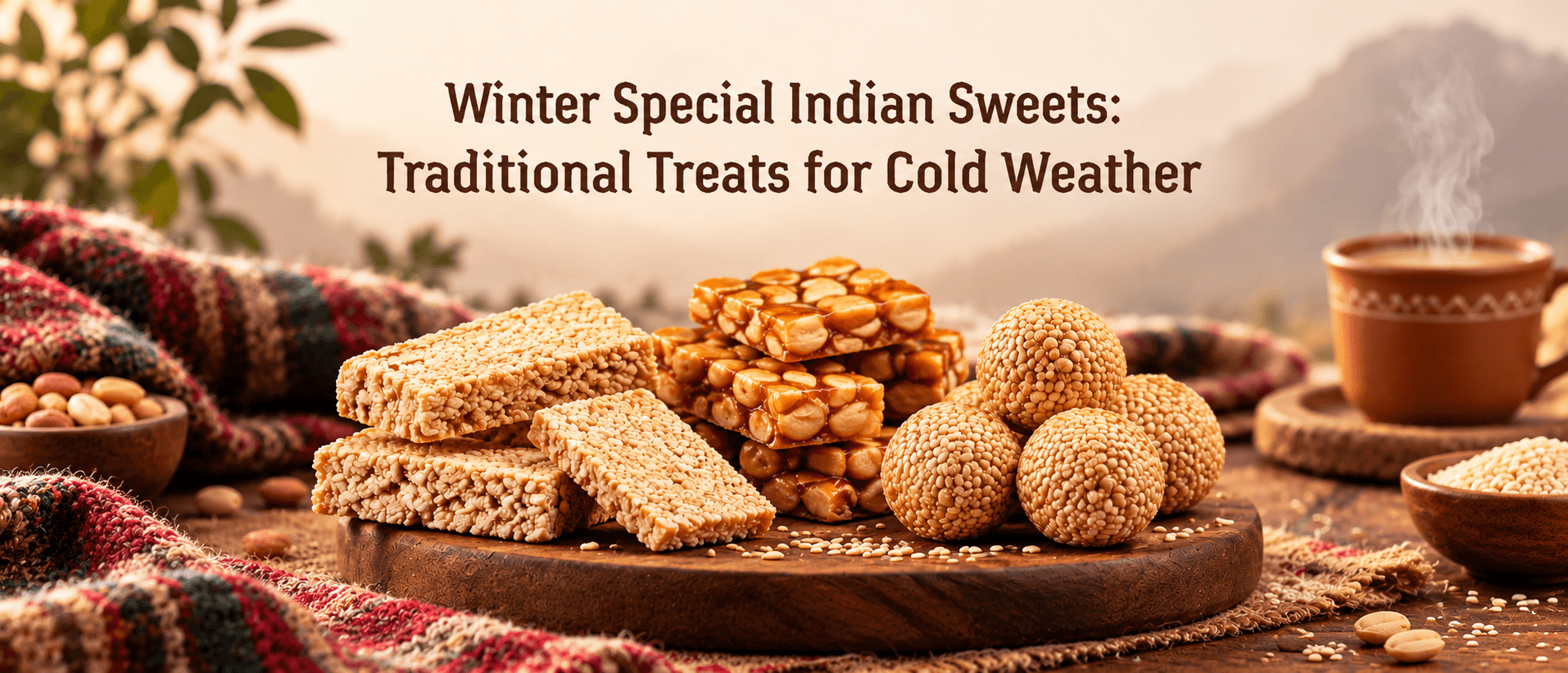
Every region in India seems to have quietly agreed on the same unspoken rule: as soon as the temperature drops, the kitchen starts smelling like roasted ghee, warm jaggery and toasted nuts. It’s not a coincidence that this happens everywhere at once — from a Punjabi household rolling pinni to a Rajasthani kitchen stirring moong dal halwa for hours, winter has always been the season India cooks its richest, most deliberate sweets. This guide rounds up ten winter special Indian sweets — the ones that show up specifically once the cold sets in, not the ones eaten year-round — along with where each one comes from, what makes it a winter food rather than a random treat, and how to buy or store them properly this season.
What Makes a Sweet “Winter Special” in India?
Not every Indian sweet is seasonal — barfi and gulab jamun show up at every occasion, all year. What separates a genuine “winter special” sweet is a combination of ingredients, effort and timing that only really makes sense in the cold months.
The Role of Ghee, Jaggery & Nuts
Winter sweets lean heavily on ghee, jaggery and nuts — all considered warming and energy-dense, useful when the body is working harder to stay warm and appetites naturally shift toward richer food. Many, like moong dal halwa or gond laddu, also take hours of slow cooking that households simply don’t have the patience (or need) for in the heat of summer.
Winter Festivals That Built These Traditions
India’s winter calendar is unusually packed with harvest and seasonal festivals — Makar Sankranti, Lohri, Pongal, Bihu — all falling within weeks of each other. Sweets tied to these festivals, made from the season’s fresh sesame, jaggery and grain harvest, are where most of this list comes from.
10 Winter Special Indian Sweets for Cold Weather
From sesame-and-jaggery classics to slow-cooked halwas, here are ten sweets that define an Indian winter.
1. Gajak
Roasted sesame seeds (or peanuts) bound in hot jaggery and rolled into thin, brittle sheets or bars — the signature winter sweet of Gwalior, Morena and much of North and Central India. It keeps for weeks without refrigeration, making it one of the most practical winter sweets to stock up on.
2. Peanut Chikki
Maharashtra and Western India’s answer to gajak — roasted peanuts set in jaggery and cut into crunchy bars. It’s the most affordable, protein-dense sweet on this list, sold everywhere from railway platforms to premium mithai counters.
3. Til Laddu
Roasted sesame ground with jaggery and rolled into small round laddus, central to the “til-gud” tradition of Makar Sankranti. Calcium- and iron-rich, and lighter than a full gajak bar.
4. Til Barfi
A denser, richer cousin of til laddu — sesame and jaggery set into a firm slab and cut into diamonds instead of rolled into balls. Common in Gwalior alongside gajak, with a more melt-in-the-mouth texture.
5. Besan Laddu
Gram flour roasted slow in ghee until deep golden, sweetened and rolled into laddus. Eaten year-round but made in its largest batches in winter, when the ghee-heavy, energy-dense recipe suits the season best.
6. Dry Fruit Atta Laddu
Whole wheat flour roasted in ghee and blended with crushed almonds, cashews and jaggery or dates. A dense, nutrient-rich laddu families specifically make for winter stamina, especially for kids and elders.
7. Gond (Dink) Laddu
Edible gum resin fried in ghee until it puffs and crisps, then mixed with nuts, flour and jaggery into laddus. Rajasthan’s answer to winter’s heaviest cravings — traditionally given to new mothers and elders for stamina and joint comfort, and rich enough that one piece is usually plenty.
8. Gajar Ka Halwa
Grated red winter carrots — available only for a few months a year — slow-cooked in milk with ghee and khoya, garnished with dry fruits. North India’s most iconic winter dessert, and one that genuinely depends on the season, since it’s made with the deep-red carrots that only grow in cold weather.
9. Moong Dal Halwa
Rajasthan’s most labour-intensive winter sweet — split yellow moong dal slow-roasted in ghee for hours until it turns a rich golden colour, then finished with sugar, milk and dry fruits. It’s dense, indulgent and considered one of the ultimate “worth-the-effort” winter treats.
10. Pinni
Punjab’s winter staple — whole wheat flour or coarsely ground wheat roasted in generous ghee with almonds and edible gum, rolled into large, hearty laddus. Traditionally made in big batches at the start of winter and eaten through the entire season, much like gajak is in the North.
Health Benefits of Winter Sweets Made the Traditional Way
Not every sweet on this list earns a health halo — ghee-heavy halwas are still indulgences — but the traditional ingredient base behind most of them does more nutritionally than a plain sugar sweet would. Jaggery retains iron, magnesium and trace minerals that refined sugar loses in processing, which is part of why it’s long been recommended over white sugar in Indian households, especially through winter when iron needs can be higher. Sesame is one of the richest plant sources of calcium, useful when winter sunlight — and the vitamin D that comes with it — is limited. Nuts and gum resin (in dry fruit laddus and gond laddu) add protein and healthy fats that make these sweets more filling than sugar alone, so a smaller portion tends to satisfy the craving.
The trade-off is that these are still calorie-dense foods, particularly the ghee- and khoya-based ones like gajar ka halwa and moong dal halwa. The traditional wisdom of eating them in small portions, through the season rather than all at once, still holds — these were always meant to be a seasonal habit, not an everyday one.
Region-Wise Guide: Which Winter Sweet Comes From Where
India’s winter sweet map is genuinely regional — here’s a quick reference:
| Region | Signature Winter Sweets |
| North & Central India (MP, UP) | Gajak, til barfi, gajar ka halwa — Gwalior and Morena are gajak’s historical home |
| Rajasthan | Gond ke laddu, moong dal halwa, til patti |
| Punjab | Pinni, gajar ka halwa, gajak and peanuts around Lohri bonfires |
| Maharashtra & Gujarat | Chikki, tilgul, exchanged during Makar Sankranti |
| South India | Ellu (sesame) urundai for Pongal, similar in spirit to North India’s til laddu |
What’s notable is how consistently every region lands on the same core ingredients — sesame, jaggery, ghee, nuts — even while the final shape and name change completely from state to state.
How to Store & Buy Winter Sweets the Right Way
Fresh vs Shelf-Stable Sweets
This list splits into two categories that need very different handling. Dry, jaggery-set sweets — gajak, chikki, til laddu, til barfi — stay fresh for three to four weeks at room temperature in an airtight container, which is why they travel and gift well. Milk- or ghee-heavy sweets like gajar ka halwa and moong dal halwa are best eaten fresh or refrigerated, and don’t hold up nearly as long.
What to Check Before Buying
Look for jaggery listed as the primary sweetener rather than a sugar syrup cut with a little jaggery for flavour, avoid sweets that look unnaturally glossy or uniformly perfect (often a sign of preservatives or liquid glucose), and prefer sellers who can speak to when their sesame, jaggery or ghee was actually sourced — freshness genuinely matters more for winter sweets than for shelf-stable mithai.
It’s also worth buying in smaller, more frequent batches rather than one large stockpile at the start of the season, particularly for ghee-based laddus and halwas, which lose their fresh, nutty aroma faster than dry gajak or chikki. If you’re ordering online for gifting, check the seller’s dispatch and delivery timelines against the festival date you’re gifting for — a gajak box that arrives a week after Lohri loses most of its point.
Which of These You Can Order Fresh From Shahi Food
Of the ten sweets on this list, Shahi Food Products specialises in the ones with the deepest roots in Gwalior’s winter sweet tradition — gajak, chikki, til laddu, til barfi, besan laddu and dry fruit atta laddu, all made with real jaggery and freshly sourced sesame, peanuts and nuts, without shortcuts built for mass production. These are also, conveniently, the sweets on this list that travel and store the best, which makes them the easiest to order online and gift without worrying about spoilage in transit.
Whether you’re craving the gajak you grew up on or want a mixed hamper covering several of these classics at once, Shahi Food’s range — including ready-to-gift packs like the Shahi Assorted Gift Pack — is made for exactly that, delivered fresh across India. Explore the full range of traditional winter sweets at
shahifood.in
Frequently Asked Questions
1. What are the most popular winter special sweets in India?
Gajak, chikki, til laddu, gajar ka halwa, moong dal halwa, gond ke laddu and pinni are among the most widely recognised winter special sweets, with regional variations across North, West and South India built around the same core ingredients: jaggery, sesame, ghee and nuts.
2. Why are these sweets eaten specifically in winter and not year-round?
Many rely on ingredients that are only in season during winter — fresh sesame and jaggery from the winter harvest, or red carrots for gajar ka halwa — or on labour-intensive slow-cooking (like moong dal halwa) that suits the shorter, cooler days better than the heat of summer. They’re also tied to winter festivals like Makar Sankranti, Lohri and Pongal.
3. How long do winter sweets like gajak and chikki stay fresh?
Dry, jaggery-set sweets like gajak, chikki and til barfi stay fresh for three to four weeks at room temperature in an airtight container. Milk- or khoya-based winter sweets such as gajar ka halwa have a much shorter shelf life and are best refrigerated and eaten within a few days.
4. Which winter sweets travel well for gifting?
Gajak, chikki, til laddu, til barfi, besan laddu and dry fruit atta laddu all travel well since they don’t need refrigeration and hold their texture for weeks, making them the most practical choices for gifting or sending to family in another city.
5. Are winter special Indian sweets healthier than regular mithai?
Sweets built on jaggery, sesame and nuts — like gajak, chikki and til laddu — retain more minerals than refined-sugar mithai and offer genuine protein and healthy fats. That said, ghee-heavy halwas and laddus are still calorie-dense, so moderation matters regardless of how traditional or “winter-appropriate” a sweet is.From Gwalior’s gajak to Punjab’s pinni and Rajasthan’s moong dal halwa, India’s winter sweet traditions all point to the same idea: the cold months call for richer, slower, more deliberate food, made with ingredients the season itself provides. This winter, skip the mass-produced tins and reach for sweets made the traditional way. Explore Shahi Food’s full range of winter special sweets and place your order today.